
Objectives that move forward between two reviews
Each objective becomes a conversation between the person and their manager. It is updated in a tap during the check-in, milestones are celebrated, and whatever is stuck comes up at the next 1:1.

Set in January, reread in December
Without regular follow-up, an objective becomes a form for the annual review.
The objective is forgotten
It sits in a spreadsheet or an HR tool that nobody opens until review time.
Delays are spotted too late
The manager finds out when it is too late to help or to rethink the target.
Successes go unnoticed
A milestone reached in June goes uncelebrated, and by December nobody remembers it.
Follow-up that fits the team’s rhythm
- 1The manager
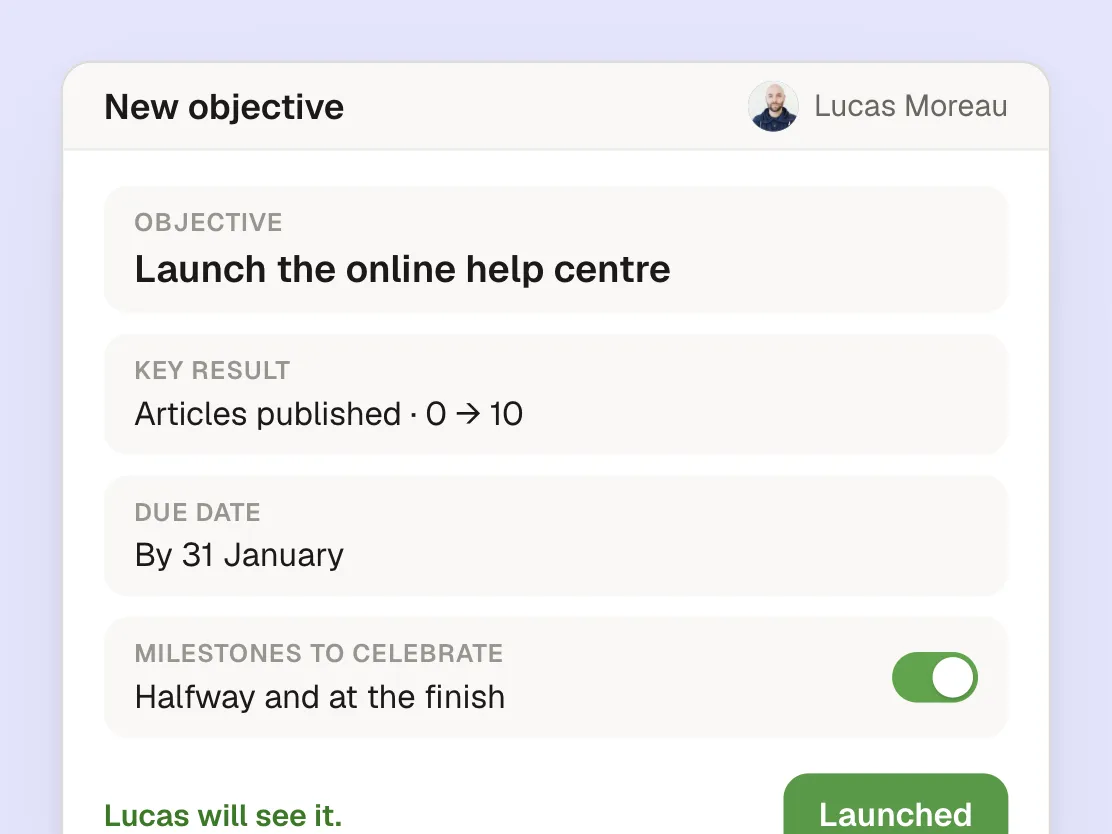
Launch an objective in a minute
A sentence for the goal, a key result to measure it, a due date, and the milestones to celebrate: halfway and at the finish. The person can also suggest their own, which their manager accepts or adjusts.
- 2The team member
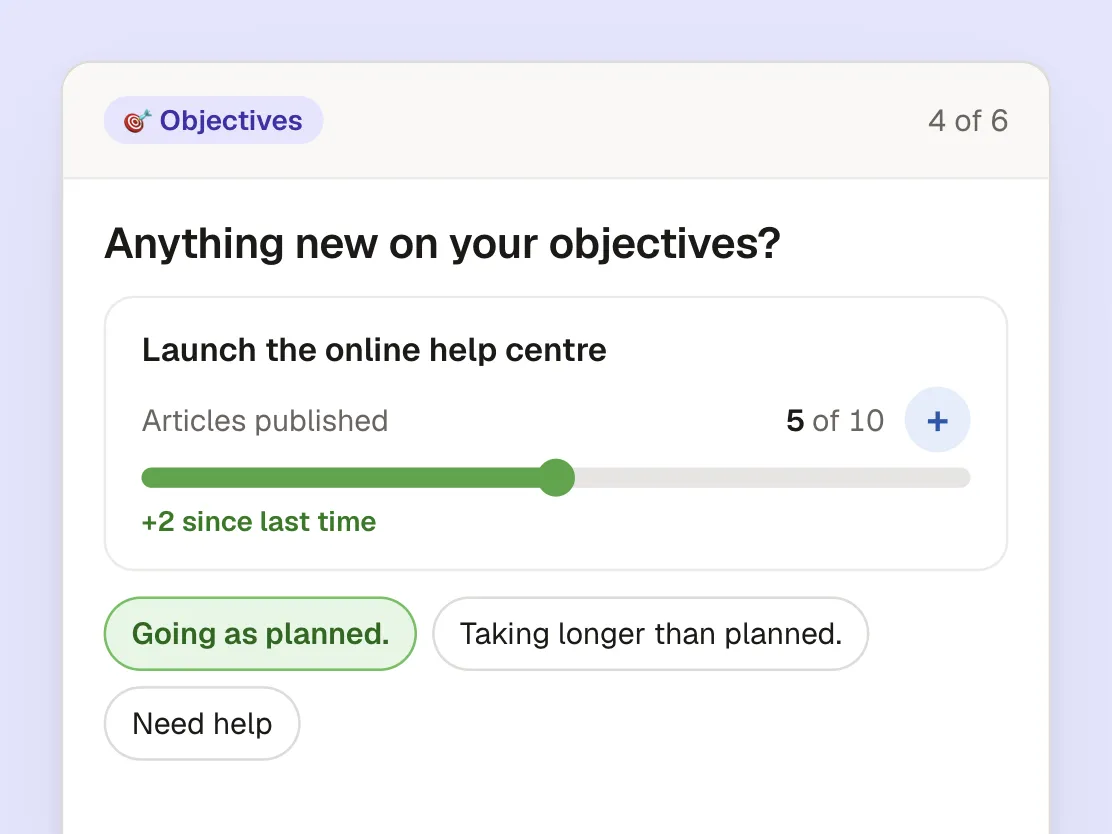
Move it forward in a tap
The check-in asks “Any news on your objectives?”. “+” adds 1 to the key result, and a status says whether it is on track. A word is enough, and the conversation keeps everything.
- 3The manager
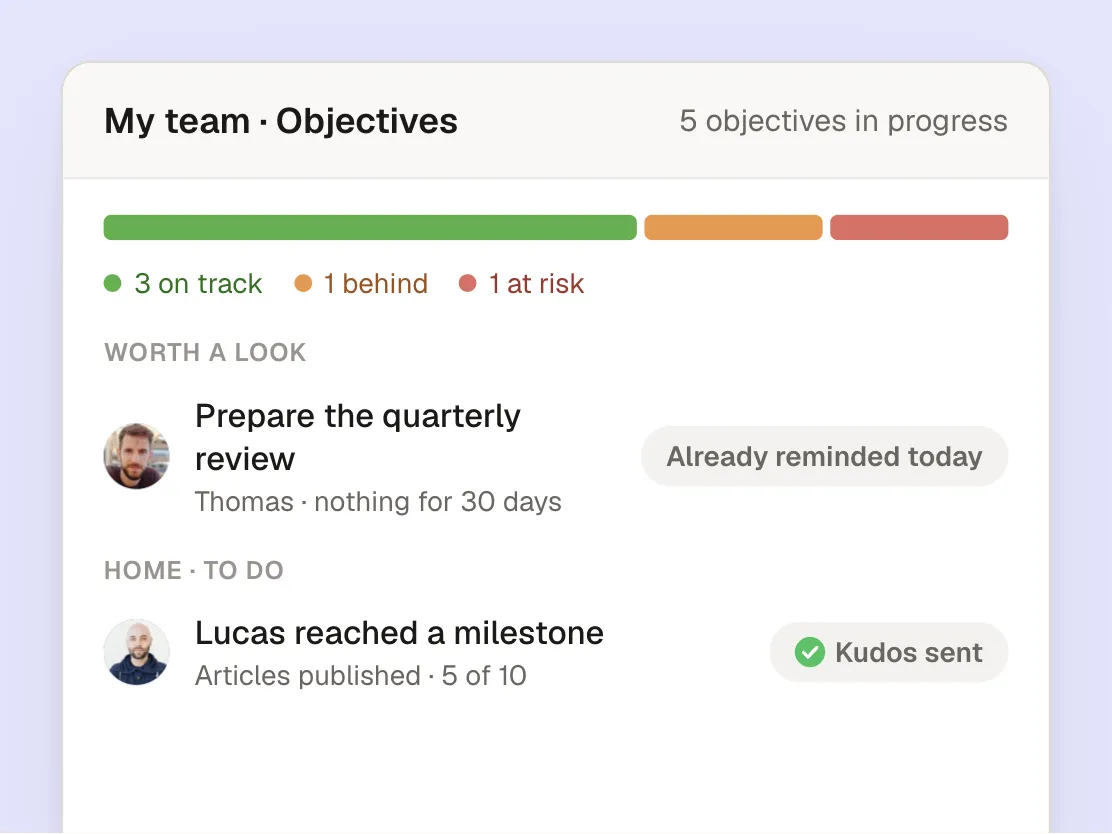
Know where to look
My team shows what is on track, behind or at risk, and who has shared nothing for 30 days; the home screen flags each milestone reached. A nudge or Kudos, in a tap.
Everyone sees what concerns them
The team member
Their objectives, the conversation with their manager and the useful documents, all in one place.
Their manager
The whole team’s progress, the nudges, the Kudos, and the topics suggested for the next 1:1.
Observers
A manager’s manager or someone from HR follows progress and milestones, without reading the messages.
The conversation stays between the person and their manager
That is what makes the answers honest: a 1:1 can only be read by its participants and any observers. Dashboards show trends by team, department or division, and never a group of fewer than 3 people. Data is hosted in Europe, in line with the GDPR.
Frequently asked questions
Do we need a particular objective-setting method?
No. An objective can fit in one sentence. Key results (a number, a percentage or “done or not done”) are there when they help to measure.
Who creates the objectives?
Usually the manager. The person can also suggest an objective: their manager accepts it as is or adjusts it before launching it.
Who reads the conversation?
The person and their manager. Observers see progress and milestones, not the messages.
And at the annual review?
The conversation keeps every update, every milestone reached and the attached documents: the review starts from what really happened during the year.
What happens when an objective stalls?
It shows up under “To look at” for the manager, and the person gets a reminder. The topic can be suggested for the next 1:1.
Your teams make your company
Give everyone a simple, regular one-to-one with their manager, and finally see how every team is doing.
- Rated 4.8 out of 5 on Google
- Hosted in Europe, GDPR compliant
- Product of the Day on Product Hunt