
Every week, know where everyone stands before the 1:1
Every week, each person tells their manager how the week went, how they feel about their workload, what is moving and what is stuck. The manager comes to the 1:1 prepared, and you see the pulse of every team.

Once a year is too late
Without a regular check-in, you find out a team is struggling when someone has already left.
The annual review comes too late
It covers the whole year at once, from memories of the last few weeks. What weighed on someone in March is forgotten.
The annual survey leads nowhere
One company-wide average, months later. No one knows which team is slipping, or what its manager will do about it.
The 1:1 starts from scratch
The manager discovers the topics in the meeting, half the time goes on catching up, and what is stuck comes up at the end, or not at all.
A few minutes a week, on each side
- 1The team member
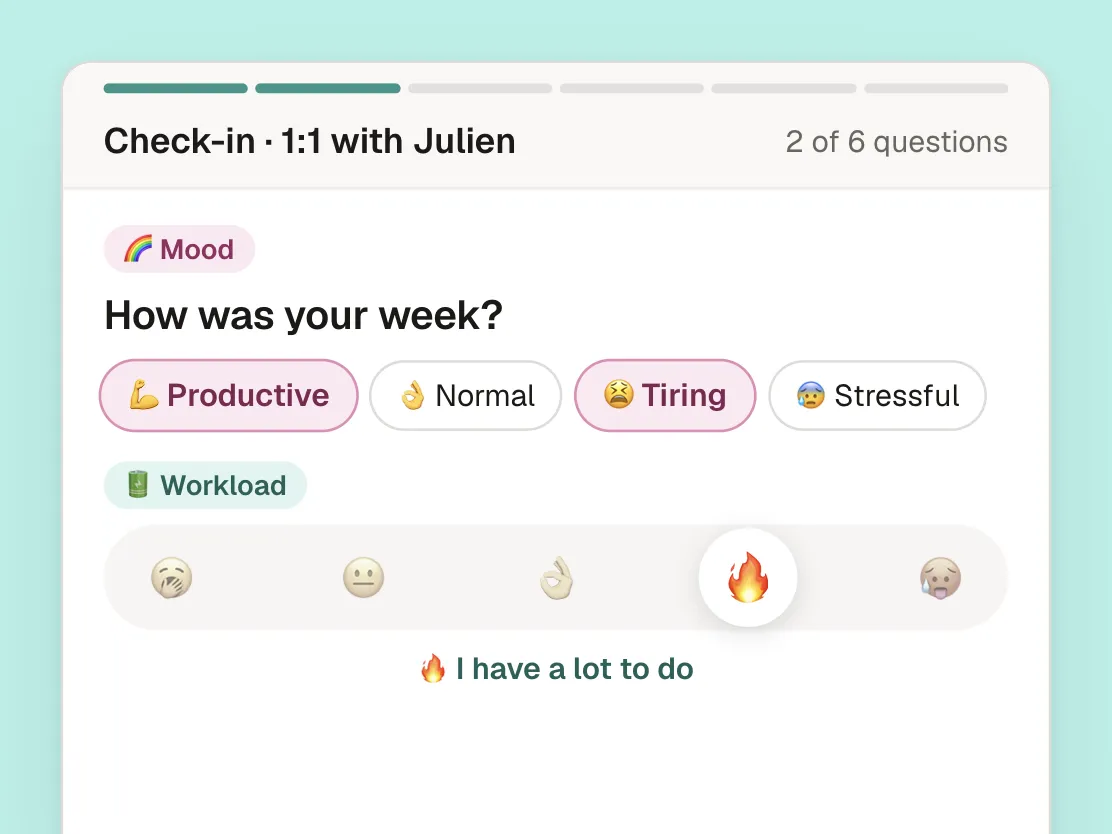
Share the week in a tap
A word or two for mood, a workload level from “Not enough work” to “Too much work”, then achievements, priorities and what is in the way. On the iPhone app, you can also say it all out loud: the sentences are sorted under each question, and nothing is shared before you review it.
- 2The manager
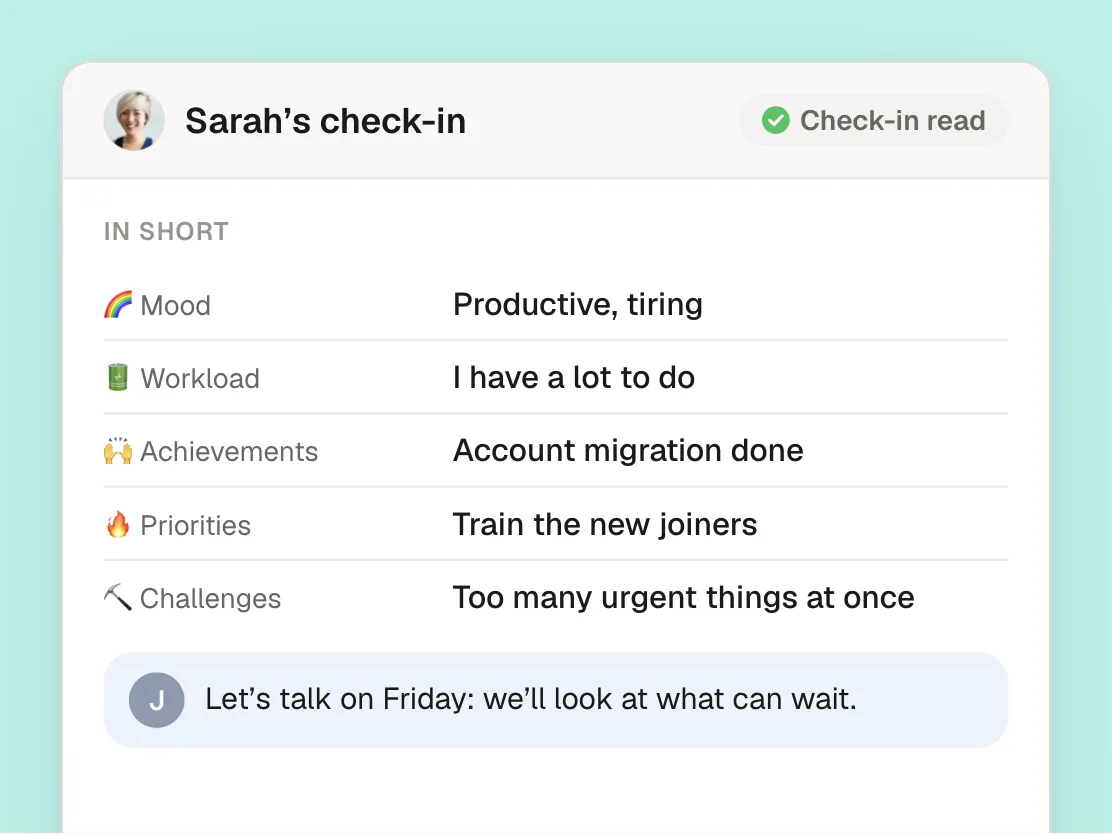
Read what matters before the 1:1
The check-in arrives “To read”, summarised question by question in “In short”. The manager reacts to or comments on an answer, and spots at a glance who has a heavy workload.
- 3The manager
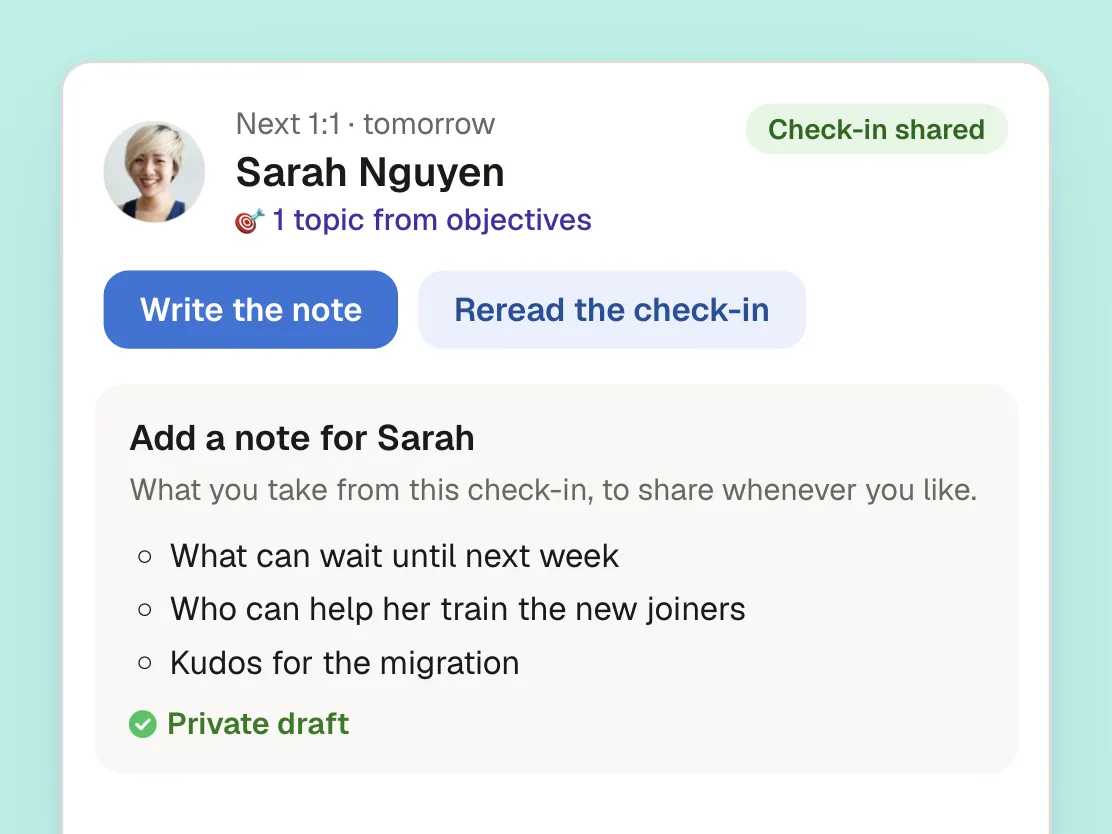
Come to the 1:1 prepared
On the day, the next 1:1 shows up with the shared check-in and the topics raised from objectives. The manager notes what they want to discuss, then shares the note when they choose. Need to know more? They add a question to the next check-in.
Everyone sees what concerns them
The team member
Their answers, the notes shared by their manager and their past check-ins, to look back over their weeks.
Their manager
Their team’s check-ins, who has answers to read or needs a reminder, and what they need to prepare each 1:1.
HR
Mood and workload by team, department or division, over time, to know where to help first.
The conversation stays between the person and their manager
That is what makes the answers honest: a 1:1 can only be read by its participants and any observers. Dashboards show trends by team, department or division, and never a group of fewer than 3 people. Data is hosted in Europe, in line with the GDPR.
Frequently asked questions
How long does it take to answer?
A few minutes. Mood and workload take a tap; the other questions take a few words, or can be skipped.
Who reads the answers?
The person’s manager. On the HR side, dashboards show trends by team, department or division, and never a group of fewer than 3 people.
How often?
Weekly, every two weeks or every three weeks, in step with the team’s 1:1s. A reminder goes out when a check-in is waiting for answers.
Can the questions be adapted?
Yes. Mood and workload stay in every check-in, so teams can be followed over time; the other questions can be adapted, and a manager can add a question for a person’s next 1:1.
What if someone doesn’t answer?
The manager sees it before the 1:1 and can send a reminder in a tap. The 1:1 still happens: the check-in prepares it, it doesn’t replace it.
Your teams make your company
Give everyone a simple, regular one-to-one with their manager, and finally see how every team is doing.
- Rated 4.8 out of 5 on Google
- Hosted in Europe, GDPR compliant
- Product of the Day on Product Hunt