8 pages, to download and share.
Download the PDFShort on time or preparation, these catch-ups are often less useful than they could be. Popwork and Ludovic Girodon, a management specialist, share one conviction: the success of managers and their teams relies on this simple ritual.
1Establish a 1:1 culture
Your team must be as convinced of the value of these meetings as you are. The simplest way: talk it through with each person and agree on the rules together (length, frequency, preparation, topics, goals). A framework built together gets everyone on board.
2Keep a weekly rhythm
Once a week works for most managers and teams: enough time for new topics, close enough not to lose track or slow down the follow-up. With an experienced, very autonomous team, every two weeks may be enough.
3Choose Monday or Friday
Midweek, the meeting cuts the week in half. Monday helps you start with the right priorities; Friday is a good time to review the week and prepare the next one.
4Plan for 30 minutes
Thirty minutes leaves time for a real discussion and to go deeper into a topic, without chopping up your day. In 15 minutes you skim the surface. A full hour every week is probably too much, with the risk of sliding into micromanagement.
5Help the person prepare
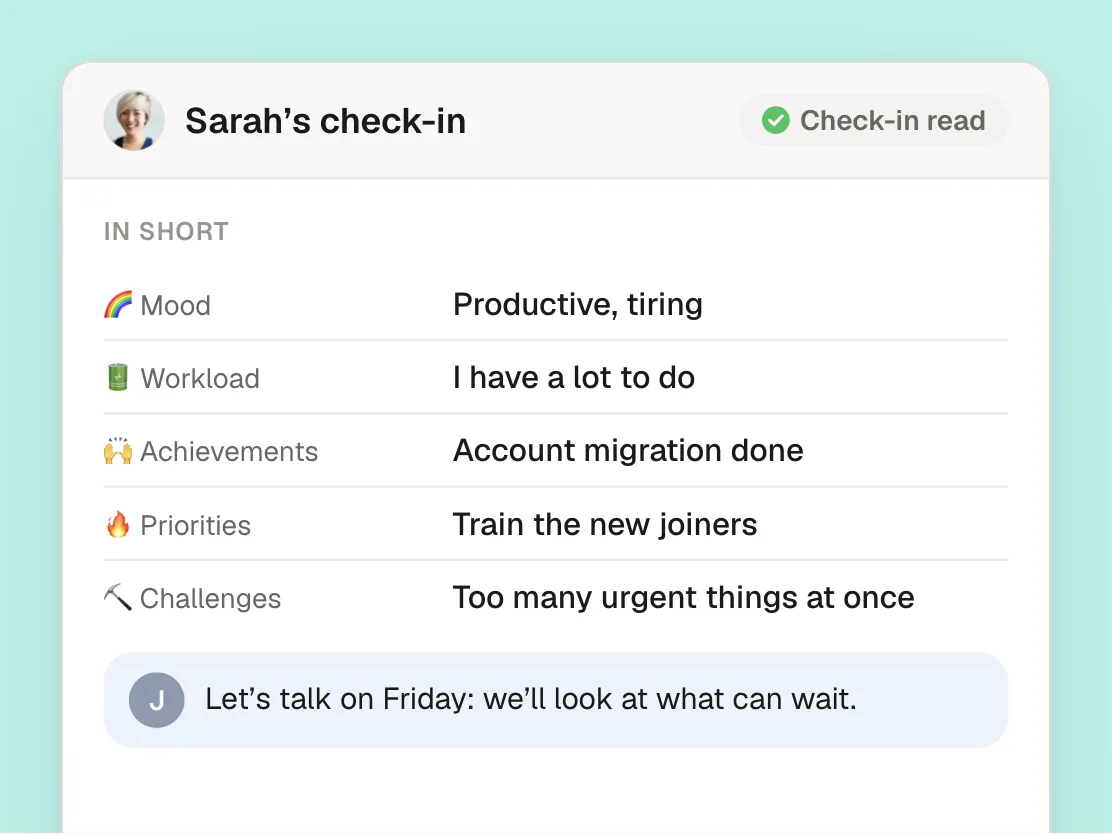
This time is theirs, not yours. A few questions asked before the meeting, a check-in, help them step back from their work in a few minutes and give you the context. Five questions are usually enough:
- How was your week?
- What notable things have you achieved?
- What are your priorities this week?
- Are you facing any difficulties or blockers?
- What other topics would you like to talk about?
6Prepare one or two topics of your own
A poorly prepared catch-up makes for a disjointed discussion, frustrating on both sides. Come with a few topics: a message to relay (news, company strategy, the market), positive or corrective feedback, something more personal. But let the other person do most of the talking: your topics should take up no more than a third of the meeting.
7Follow up
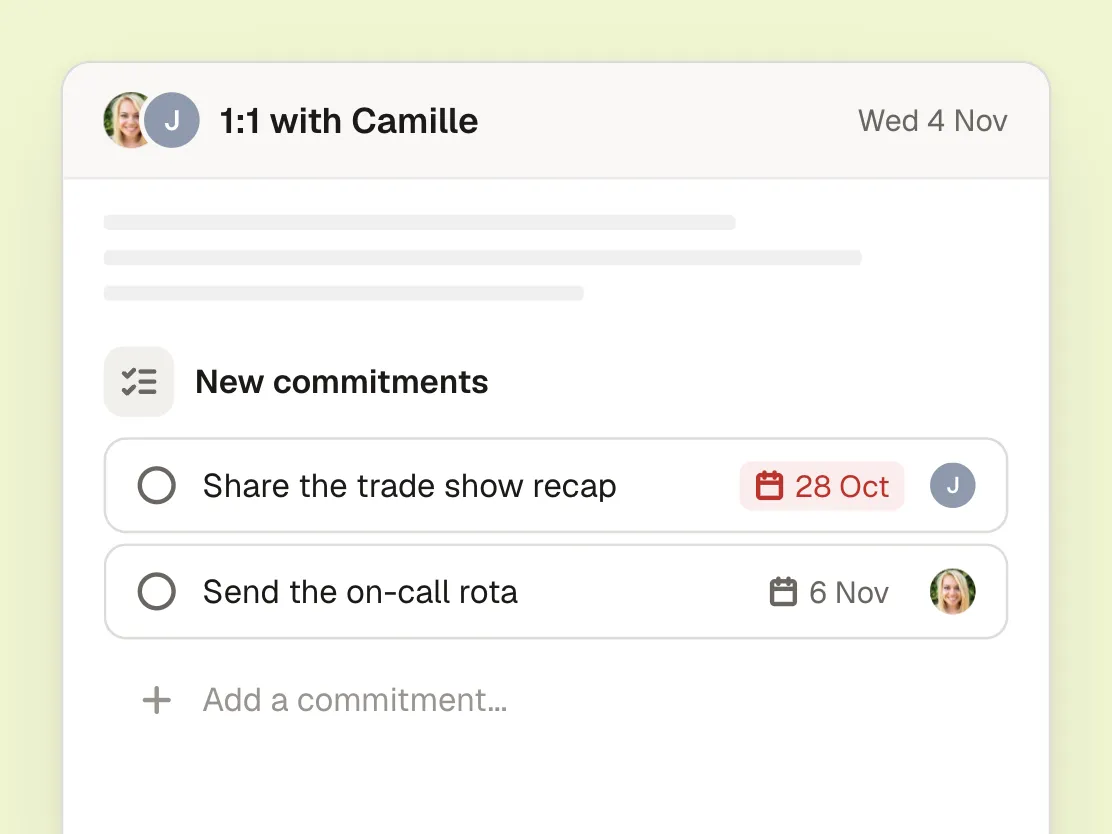
A conversation with no next step is as if it never happened. End every topic that needs it with who, what, when: who carries out the action, which action, and by when. At the next meeting, you see the progress at a glance.
In short
Done well, weekly 1:1s become one of a manager’s most useful tools: a format built with the team, preparation on both sides and rigorous follow-up.