10 pages, to download and share.
Download the PDFReaching objectives, sharing information, listening to and training team members are some of every manager’s key roles. According to Peter Drucker, they are even three of the manager’s five missions. Yet you can’t carry them out without knowing how to take the pulse of your team, regularly, to help and support them continuously.
1Ask the right questions
Taking the pulse is above all about asking the right questions.
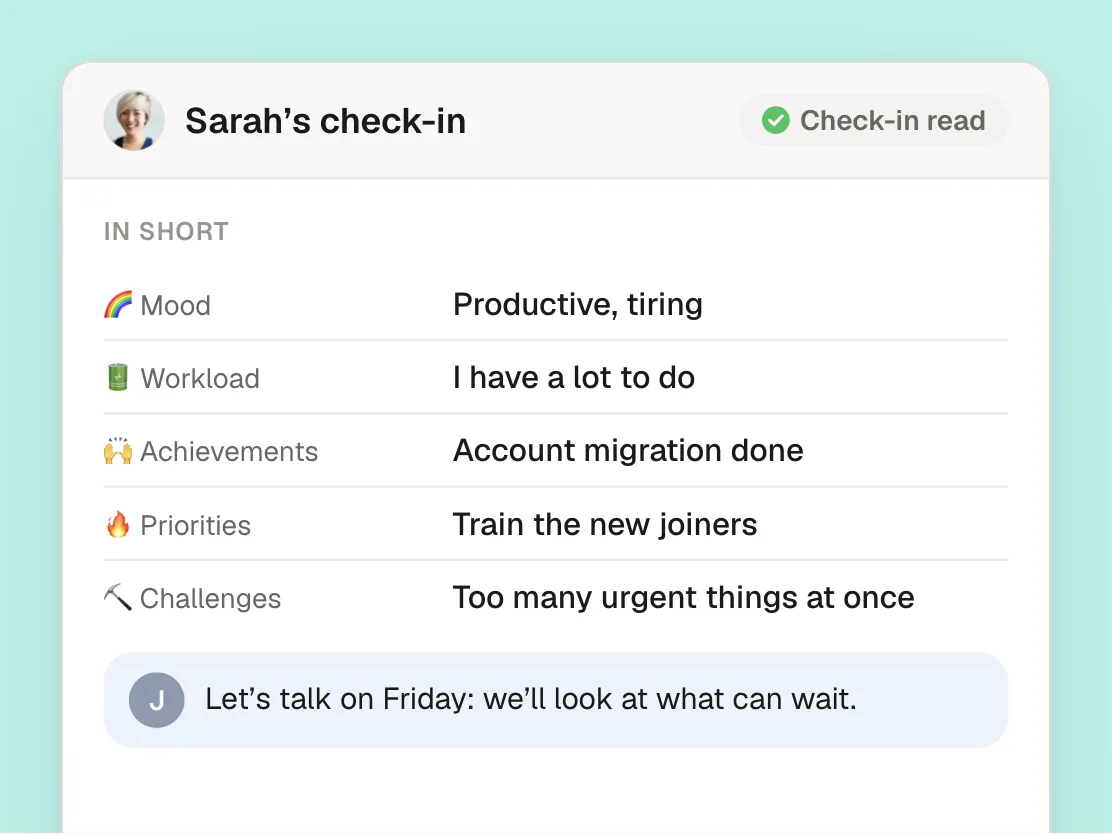
How was your week?
Asked in writing or in person, this question will teach you a lot, provided you give the person time to really answer, and really listen. Leave a silence after their first answer: you are bound to learn more. Productive, inspiring, stressful, tiring, frustrating? It’s up to you to find out.
How is your workload at the moment?
Ask this question regularly. Too much work for too long leads to a level of stress and fatigue that heads straight to burnout. On the other hand, feeling you don’t have enough to do quickly demotivates and can lead to bore-out. That’s why manager and employee need to talk about it openly.
Are you confident about achieving your goals?
Setting goals and helping your team achieve them is essential. To take the pulse on goals, regularly ask for an update that is not objective but subjective. You will learn a lot more, and find it easier to act as a coach.
2Ask questions to dig deeper
A conversation between manager and employee, during a 1:1 for example, is far more useful for both when the employee speaks more than the manager. If a team member tells you they are stressed or frustrated at the moment, or not confident about their goals, don’t rush to answer or give advice. Take the time to understand, with follow-up questions asked one at a time or in sequence:
- Why are you stressed?
- What stresses you out the most?
- What would reduce your stress level?
Coaches don’t hand their team a ready-made answer: they help the team find the right answers for themselves.
3Share quality feedback
If your team members make the effort to open up and share how they feel, it is essential to give feedback in return. A few tips to do it well:
- Give feedback often. The more often you do it, the more natural it becomes, for you and your team.
- Be specific. Feedback must be clear and actionable: the more precise, the better.
- Focus on strengths. Starting with strengths is a good way to give feedback.
- Don’t avoid areas for improvement. If you never really say things, how can people understand how to improve and develop their skills?
- Listen rather than monopolise the floor. Show empathy, give the person time to express themselves before you respond, and don’t interrupt.
4Set up follow-up actions
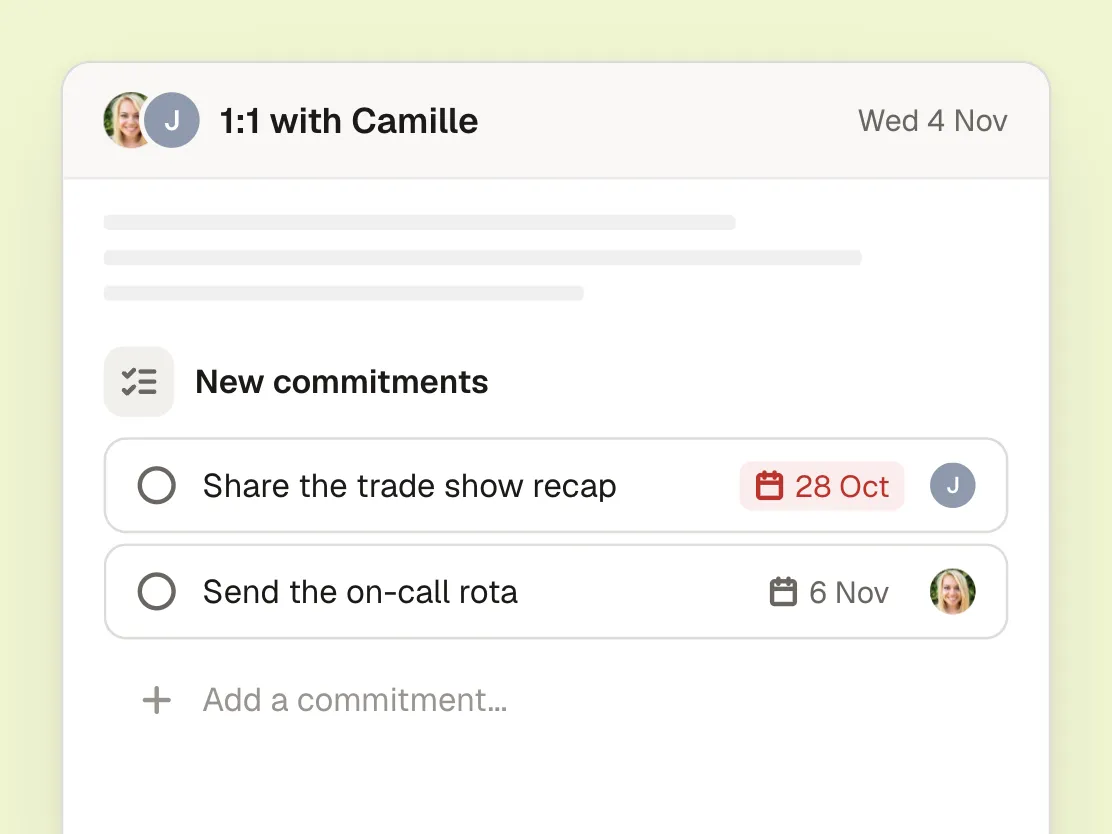
One essential element is too often forgotten: agreeing on next steps and following up. Without next steps, the exercise is just another conversation, almost as if it never happened.
Recap the actions to take, the topics to explore and the decisions made. As a manager, don’t hesitate to assign yourself action items to help people get past their roadblocks. At your next 1:1, take a few minutes to review the action items from the previous one: it’s the best way to make sure every topic has been covered, and to position yourself as a coach, or even a leader.
5Learn to read between the lines
As a manager, you sometimes need to read between the lines and not settle for a superficial answer.
When everything is going well but confidence in the goals is low
If your team is doing well and the workload is normal, but the goals are far from being met, there may be a problem: ownership of the goals, a misunderstood scope of role, motivation, or many other things. It’s up to you to dig.
When one person is always doing well
If you take the pulse regularly and someone is consistently fine, that may be very good news, but it may also be hiding something. With these people, take the time to dig deeper now and then to get to the bottom of things.
When the whole team is always doing well
Either your team is in an excellent dynamic, or it doesn’t dare tell you everything. Building a good level of trust between manager and team is essential, but it takes time and work on both sides. Don’t underestimate it.