8 pages, to download and share.
Download the PDF1Rituals
Managers need to set up simple management rituals with their teams. These rituals are what determine each team’s performance, engagement and culture.
Have I been having regular 1:1 meetings with each member of my team?
The 1:1 meeting is the most important ritual a manager can put in place. It is a privileged moment between the manager and each team member, the one where managers build a relationship of trust with each person, for more engagement and performance. With hybrid work now widespread and the new expectations of younger generations, these meetings matter more than ever.
Have I been holding regular team meetings?
Meeting with the whole team is essential. It is the time to review the team’s priorities and current performance together, address difficulties and roadblocks, and find solutions. It is also the right forum to share important information and best practices, and to celebrate successes.
2Active listening
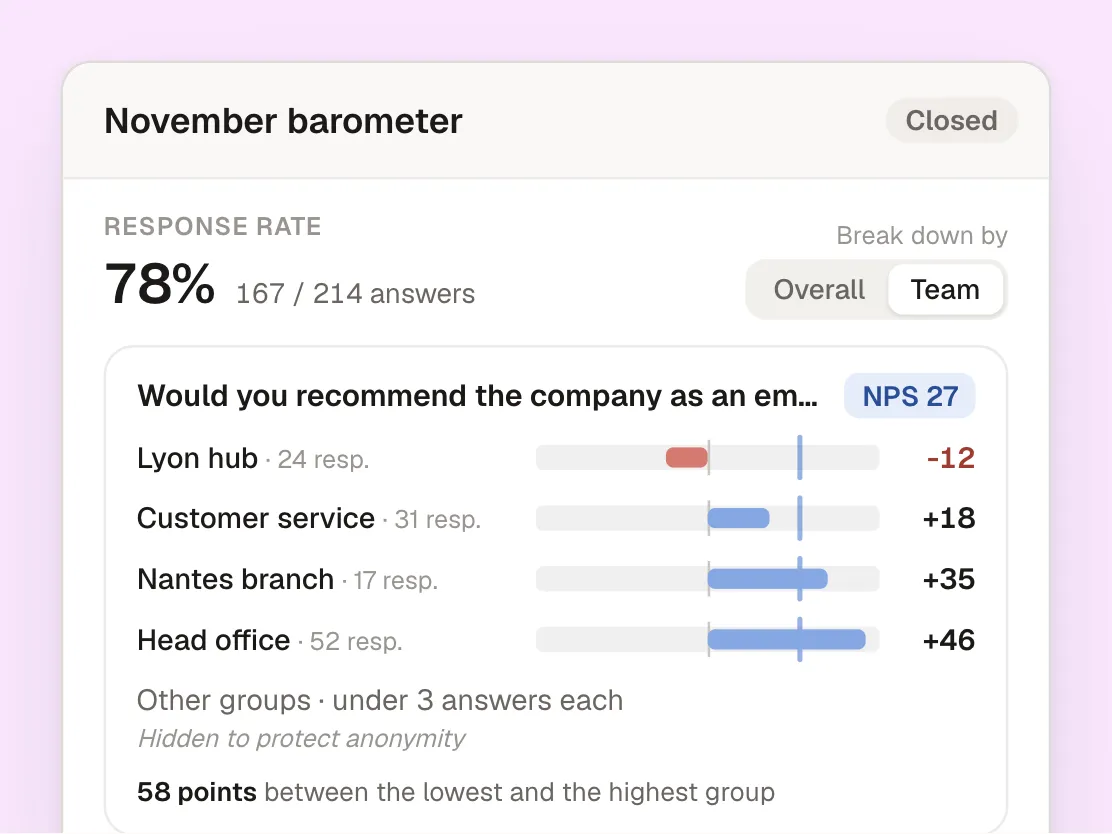
Actively listening to your team and taking its pulse is not always easy. Yet feeling the mood of your team is key to managing cohesion and performance, and to making sure each person can develop and grow.
Do I know how my team is feeling right now?
We sometimes dive too quickly into operational tasks, or ask questions like “How are you doing at the moment?” mechanically. Yet the manager needs to take the pulse regularly: with simple questions asked sincerely, such as “How was your week?”, or with pulse-taking tools. What matters is to really listen and to act when necessary.
Have I discussed what’s not working in the team to identify solutions and areas for improvement?
Knowing how everyone feels is a great first step, but a team is made up of people working together. A manager needs to identify the points of friction or dysfunction in the team in order to keep improving processes and the team culture. The most effective way is often to talk about it, and especially to take stock together at the end of each project.
3Communication
Managers must know how to share the right messages with their teams. They must also make sure team members communicate well with each other. In the office, hybrid or remote, it is often more complicated than you might think.
Do we have clearly defined communication channels in the team?
This simple question is extremely important: are team members using the same channels, and in the right way?
- When should we use email, instant messaging, the phone?
- Who should be kept in the loop?
- When do we use shared channels, and when private ones?
Once these rules of the game are clear, it becomes much easier for a team to communicate effectively. Where there are gray areas, there is a real risk of confusion, lost information and therefore lost performance.
Since the start of the year, have we discussed the quality of our communication and collaboration as a team?
Communicating well and collaborating smoothly is always more complicated than you think. So it is healthy to regularly take a moment as a team to step back and ask which processes or topics cause friction or a loss of efficiency. Three rules:
- Play it down: it is normal that not everything works perfectly.
- Stay objective: focus on processes and topics, not on people.
- Look for solutions rather than dwell on problems.
It is not a simple exercise for a manager. But if you skip it, in a few months small frictions will have become real dysfunctions.
4One team
Creating a sense of belonging is one of the manager’s missions: making sure the team has its own culture and that each person feels included can be a challenge.
Have I dedicated a day or half-day to a different team activity to strengthen the bond within the team?
Taking time to step out of day-to-day operations is important, and doing it as a team even more so now that hybrid work has taken hold. Plan half a day, a day or even two if the schedule allows, to spend time together and build relationships. It is also during these moments and informal conversations that new ideas are born.
Since the start of the year, have I taken the time to share my vision with the team?
A manager must show leadership, and one important aspect of leadership is the ability to share a vision. What is your vision for your team? How will you contribute to the success of your business, and with what state of mind? It may seem obvious, but you need to share it regularly with the team to give meaning to daily work and build a shared vision.
5Goals
All the topics above are there to create the right environment for your team to perform. To go further, everyone needs to know and own their objectives. Managers, for their part, need visibility on goals: which ones are on track and which ones are at risk right now? That is what lets them make the right decisions: actions to put in place, resources to allocate, and so on.
Does each team member have clearly defined objectives?
Defining goals for each person on the team is part of a manager’s job. Well-defined goals are simple, measurable and time-bound. Whatever method you use, team members need to own their objectives to work independently and find motivation in them.
If so, do I know precisely where we stand on each of these objectives?
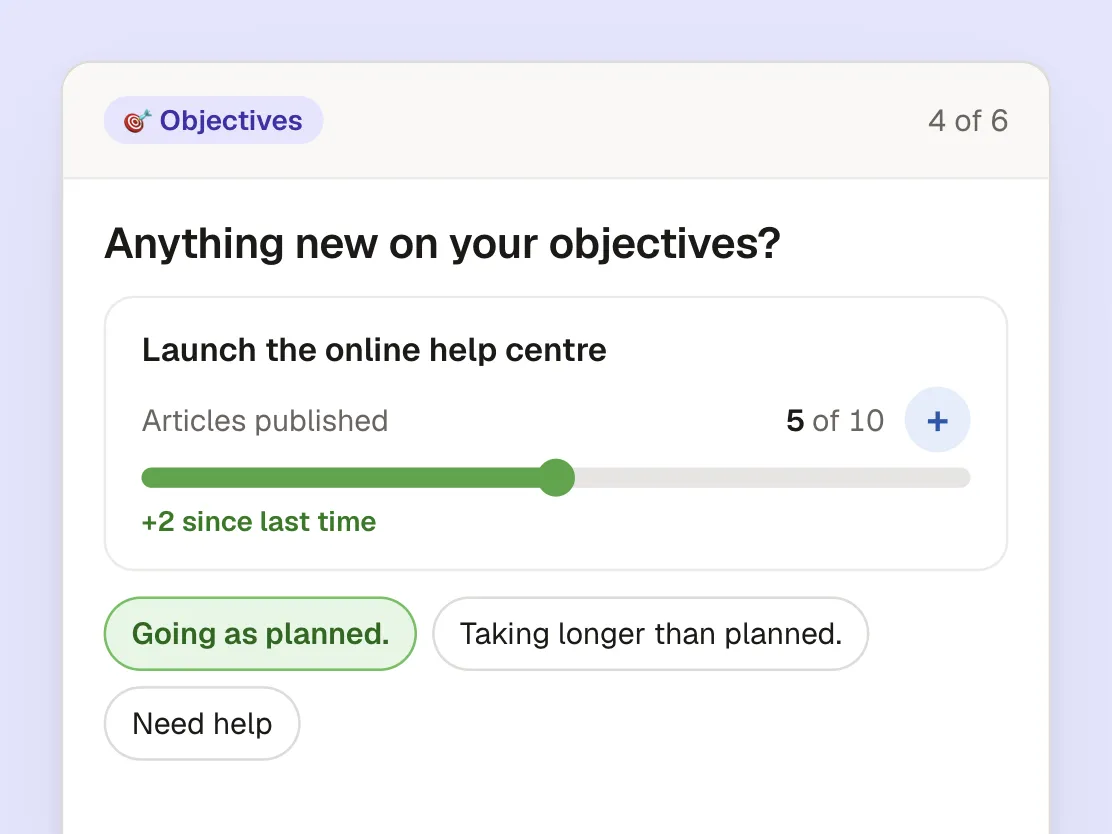
Having well-defined goals is a good step. Having well-defined goals and knowing precisely where you stand is much better. Whether you share progress orally or with tools, a manager needs good visibility of all the team’s objectives to focus on the right priorities and help the team achieve them.
In short: the 10 questions
- Rituals: have I been having regular 1:1 meetings with each member of my team?
- Rituals: have I been holding regular team meetings?
- Active listening: do I know how my team is feeling right now?
- Active listening: have I discussed what’s not working in the team to identify solutions and areas for improvement?
- Communication: do we have clearly defined communication channels in the team?
- Communication: since the start of the year, have we discussed the quality of our communication and collaboration as a team?
- One team: have I dedicated a day or half-day to a different team activity to strengthen the bond within the team?
- One team: since the start of the year, have I taken the time to share my vision with the team?
- Goals: does each team member have clearly defined objectives?
- Goals: if so, do I know precisely where we stand on each of these objectives?